
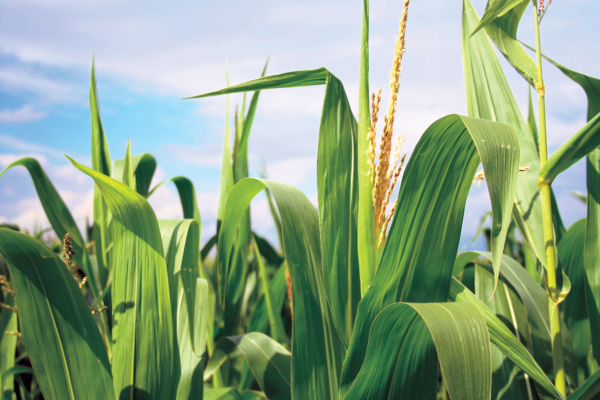
With an earlier corn harvest and recent rainfall, livestock producers are considering grazing volunteer corn and crop residue. However, several factors should be considered before turning livestock into harvested cornfields, including nitrate levels, forage quality and nutrient removal.
Grazing corn stalks can be an effective way to manage residue left after harvest while providing an inexpensive forage source to supplement hay supplies. For every bushel of corn produced, a field can contain up to 6 pounds of cobs, 18 pounds of stems and 15 pounds of husks. In a field averaging 150 bushels per acre, that can amount to nearly 6,000 pounds of dry matter remaining in the field.
The husks, cobs and stalks average about 4% protein, while the leaves and grain average 9% protein. By comparison, fescue hay averages 8% protein. Corn residue can therefore provide a useful forage option for producers looking to stretch their hay supplies.
Nitrate accumulation is one of the primary concerns when grazing volunteer corn. Nitrate builds up in plants when they cannot convert it into protein. This can occur for several reasons, including excessive nitrogen application, cold weather and drought conditions. When rainfall relieves drought stress, plants can take approximately two weeks to return to nitrate levels considered safe for livestock consumption.
The safest way to determine whether corn plants are suitable for grazing is to have the forage tested. Producers should collect 10 to 20 corn stalks, leaving the bottom 6 inches closest to the ground intact and harvesting the next 6 to 8 inches of stalk. The samples should be bundled in a plastic bag and taken to a local University of Missouri Extension center for testing. The results will indicate the amount of nitrate in the plant.
Nitrate test results are divided into four categories. Forage classified as safe can make up 100% of an animal's diet. The caution category can cause problems with pregnancy and young livestock, so forage in this range should not exceed 50% of the diet. Forage classified as danger should make up no more than 25% of the diet. Toxic forage should not be fed under any circumstances.
Producers should also consider the nutrients removed from fields when livestock graze corn residue. Each bushel of corn harvested removes approximately 0.9 units of nitrogen, 0.45 units of phosphorus and 0.30 units of potassium. Corn silage removes approximately 9 units of nitrogen, 3.6 units of phosphorus and 9 units of potassium per ton.
Livestock grazing also removes nutrients from the field, although the amount varies depending on the animal and the forage consumed. More than 50% of the fertility taken up through forage production is lost during livestock production.
Before opening gates and allowing livestock to graze harvested cornfields, producers should account for the nutrients being removed and determine whether they are prepared to replace that fertility. Proper management can make grazing corn residue a valuable way to use available forage while maintaining the long-term productivity of the field.
Source: University of Missouri Extension, "Nitrate in volunteer corn"