
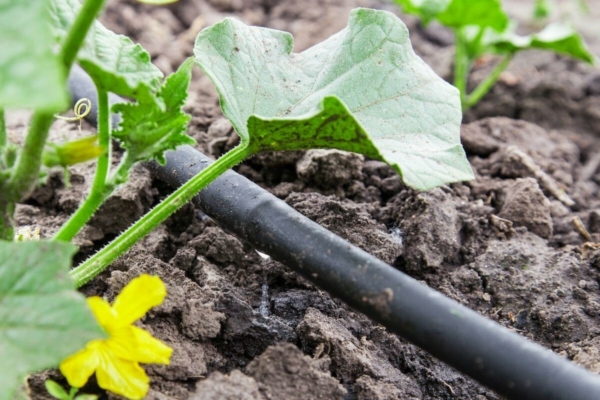
U.S. farmers are adopting water management innovations to address climate volatility, water scarcity and rising input costs, achieving water use reductions of 20% to 40% while maintaining or improving crop yields.
Producers across the country are demonstrating how technological advances and improved management practices can help agriculture meet growing food production demands while working within resource constraints. These efforts are driven by practical economic and environmental benefits rather than government regulation alone.
Three primary factors are accelerating the adoption of water management innovations: increasingly unpredictable weather, rising production costs and advances in agricultural technology.
Changing weather patterns have made water availability less predictable, with some growing regions experiencing periods of excessive rainfall followed by prolonged drought. California almond farmer Christine Gemperle has observed increasingly dramatic swings in precipitation, creating challenges for growers trying to manage irrigation and maintain consistent production.
Economic pressures are also encouraging more efficient water use. Rising energy costs, increasing water prices and growing competition for water from urban and industrial users are making traditional irrigation practices more expensive and difficult to sustain.
At the same time, technological advances are giving farmers more tools to manage water resources. Satellite imagery, wireless sensor networks, artificial intelligence-driven data analytics, GPS guidance and advanced materials are helping producers make more precise irrigation decisions when combined with agronomic knowledge.
Precision irrigation is one area where these advances are making a difference. Center pivot irrigation systems transformed large-scale agriculture when they were introduced in the mid-20th century. However, traditional systems generally applied water at consistent rates across entire fields, regardless of variations in soil type, topography or crop needs.
Since the 1990s, growers in states such as Nebraska have increasingly adopted a crop-per-drop approach to irrigation. Total water withdrawals for corn and soybean production have remained flat or declined while overall yields have increased.
Modern variable-rate irrigation systems build on traditional center pivot technology by adjusting water application rates for individual field zones based on soil characteristics, topography and crop development. These systems can reduce water use by 15% to 30%, lowering pumping costs and allowing farmers to irrigate larger areas with available water resources.
Crop genetics are also contributing to improved water efficiency. Commercially available crop varieties increasingly incorporate traits that help plants withstand drought and use available moisture more effectively. Deeper root systems allow plants to access water farther into the soil profile, while modified leaf characteristics can reduce water loss through transpiration.
These improvements have helped modern corn hybrids produce more grain per unit of water consumed than older varieties, providing growers with another tool to manage production risks as weather patterns become increasingly unpredictable.
Improved water management also offers a competitive advantage for U.S. agricultural exports. As international markets place greater emphasis on sustainability, water efficiency and responsible resource management are becoming increasingly important considerations alongside price and product quality.
Freshwater accounts for less than 3% of Earth's total water supply, and agriculture is its largest consumer. As producers face growing pressure to increase food production while managing limited resources, advances in irrigation technology, crop genetics and water stewardship demonstrate how agricultural productivity and resource conservation can work together.
Source: U.S. Grains & BioProducts Council, "ICYMI: Suárez Pens Article On U.S. Farmers’ Approaches Toward Water Scarcity"