
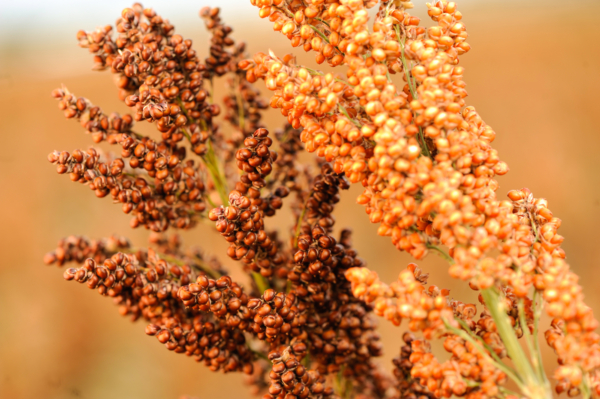
Sorghum could replace about 90% of the maize currently used in European livestock feed if grown one year out of three, according to a new study examining the crop’s potential to help agriculture adapt to climate change.
Maize is the primary cereal crop used in livestock feed, but its production in the European Union faces increasing challenges from higher temperatures and water scarcity. Sorghum, which tolerates heat and limited water availability, could provide a more climate-resilient alternative.
Sorghum remains uncommon in Europe, accounting for just 0.1% of the continent’s cropland. Globally, 47% of sorghum production occurs in African countries, while the United States accounts for 17%.
Researchers found that climate change could have a positive overall impact on European sorghum yields, although results may vary by region. Yields are expected to increase in northern Europe while declining slightly in southern Europe.
Under current climate conditions, average European sorghum production is about 3 metric tons per hectare. Depending on the climate change scenario, average yields could rise to 3.4 to 3.8 metric tons per hectare between 2050 and 2100.
The study also projects an expansion of European cropland with high and stable sorghum production potential. These areas currently account for 22% of European cropland but could increase to 29% to 34% by the end of the century.
The findings suggest sorghum could help reduce agriculture’s dependence on water-intensive maize. In France, for example, maize accounts for 38% of irrigated cropland, highlighting the crop’s role in agricultural water demand.
To assess sorghum’s future potential, researchers developed a machine-learning model to predict grain yields based on climate variables, including relative humidity, temperature and precipitation. The model was trained using 11,644 historical yield data points collected from grain sorghum grown in counties or departments across France, Italy, Spain and the United States between 2000 and 2020.
Researchers combined the model with climate projections for the middle and end of the 21st century. The analysis incorporated 20 climate change scenarios generated using five climate models, allowing researchers to evaluate potential production outcomes across a range of future conditions.
The results indicate that sorghum could help European agriculture adapt to climate change, particularly in regions facing water shortages. In France, expanding sorghum production and incorporating the crop into livestock feed could help improve water resource management and increase feed self-sufficiency.
Water conserved by replacing some maize production with sorghum could be allocated to other crops, potentially helping agricultural producers manage increasingly limited water supplies while maintaining livestock feed production.
Source: National Research Institute for Agriculture, Food and Environment, "Sorghum may help European agriculture face climate change"