
The grain industry is a vital pillar of global agriculture, responsible for storing, processing and distributing billions of bushels of crops annually. However, within the massive infrastructure lies one of the most hazardous working environments in the agricultural sector: confined spaces. Every year, incidents involving engulfment, toxic atmospheres, mechanical entanglement and explosive dust lead to preventable fatalities. Safely managing these spaces requires an understanding of physical risks, strict adherence to federal regulations and a deeply embedded workplace safety culture.
In industrial terms, a confined space is defined by three distinctive characteristics: It is large enough to enter and perform work, it has limited or restricted means for entry or exit, and it is not designed for continuous occupancy.
Within the grain industry, confined spaces include storage bins, silos, pits, transport vehicles and machinery interiors. Because these structures are built to maximize storage efficiency and facilitate gravity-fed material flow, they lack natural ventilation, easy escape routes or stable flooring when filled with bulk agricultural products.
The dangers are dynamic, often transforming from safe environments to fatal traps in a matter of seconds. In this article, we’ll examine the core tenets of a compliant grain entry program, advanced technology that reduces the need for human entry, essential safety gear and handling the unexpected.
Regulatory Entry Framework and Standards
Unforeseen accidents can and do happen, but there are ways to minimize such occurrences. A compliant grain entry program is essential for any facility. OSHA requires grain operations to follow the Grain Handling Facilities Standard, 29 CFR 1910.272, noting especially sections (g) and (h). OSHA standards take precedence over general permit-required confined space rules.
The core tenets include:
Energy Isolation (Lockout/Tagout). Before anyone crosses the threshold of a confined space, all mechanical, electrical, hydraulic and pneumatic equipment serving that space must be physically isolated, locked out and tagged. This guarantees that machinery cannot be accidentally turned on while a worker is inside.
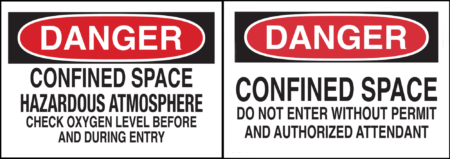
Atmospheric Testing. The air inside the space must be pretested using calibrated direct-reading instruments. Testing must be conducted at the top, middle and bottom of the space to account for gases of varying densities. The air must be verified as safe for oxygen content, flammability and toxic concentrations before entry is authorized, and monitoring should continue throughout the work shift. If the air tests as unsafe, the area should be thoroughly ventilated until it is retested and verified as safe. If there is any chance that unsafe conditions may recur, the ventilation should stay in place while workers are present. Asphyxiation, toxic exposure and combustible dust explosions are severe consequences of failure to follow these vital steps (Figure 1).
Permit Systems. A formal entry permit must be filled out, signed by an entry supervisor and posted at the portal (Figure 2). This document details the hazards present, the isolation measures taken, the atmospheric readings and the names of all authorized entrants and attendants.
The Attendant (Standby Observer). A trained observer must remain stationed outside the entrance for the entire duration of the entry (Figure 2). This person’s sole responsibility is to maintain continuous communication with the entrant, monitor for shifting hazards and summon emergency rescue services if things go wrong. Crucially, the attendant is legally prohibited from entering the space to attempt a rescue.
Advanced Technology and Specialized Gear for Safety
The safest entry is the one that never happens. Many modern grain operations use advanced technologies to manage inventory without human intervention:
Acoustic and Radar Sensors. High-tech sensors mounted at the top of bins map the surface of the grain pile, providing accurate volume data and detecting voids or bridging without requiring a worker to look inside.
External Cleanout Tools. High-pressure air whips, mechanical whips and robotic cleanout systems can be lowered through top hatches to break up crusted grain and clean silo walls from the safety of an exterior platform.
Zero-Entry Sweep Augers. Permanently installed floor augers can be operated entirely from external control panels, eliminating the need for personnel to sweep the remaining grain toward the sump.
Drones. Caged drones outfitted with specialized sensors detect abnormalities such as structural damage in hazardous spaces and can eliminate human intervention. However, drones must follow strict safety protocols, utilizing collision-tolerant or caged UAVs, explosion-safe lighting, preflight risk checks and atmospheric monitoring despite avoiding direct entry.
When human entry is needed, such as for structural repairs or equipment maintenance, stringent protective measures must be deployed for safe entry. Some effective tools and gear are specially designed to protect workers:
Body Harnesses and Lifelines. To avoid engulfment and other possible dangers, entrants must wear a full-body harness connected to a viable anchor point outside the bin or attached to a rescue tripod. If a worker begins to sink into the grain, the lifeline allows the attendant to immediately halt the worker’s descent and haul them to safety.
Forced Mechanical Ventilation. Large, explosion-proof blowers should be hooked up to the space to purge stagnant air, dilute toxic fumes and maintain a steady supply of fresh oxygen while work is performed.
Respiratory Protection. Depending on dust levels, workers should wear properly fitted respirators, such as N95 or N100 masks, or supplied-air respirators if toxic fumes are suspected.
Expect the Unexpected
You have likely heard the saying, “Expect the unexpected.” When a space hasn’t been visited in a long time, the unknown is a crucial factor. In confined spaces, unexpected hazards are especially dangerous since the worker has limited mobility, few escape options and poor lighting. Training plus a cool head will provide the best outcome.
Before entering any portal, a thorough look at the space using a good flashlight is warranted. For example, if you enter a space only to find a large, active wasp nest, it is key not to panic but to calmly evacuate. Keep your attendant informed. Do not try to remove the nest yourself. Call professionals and suspend the confined space entry permit until the space is safe again.
Unexpected items such as leftover tools, debris or water puddles are slip, trip and fall hazards. Again, a complete inspection of the space before entering is warranted and necessary for a permit.
True prevention requires focusing on the human element to foster a culture of safety. Workers who have entered bins hundreds of times without incident develop a false sense of security, assuming they can outrun flowing grain or notice a toxic atmosphere before it affects them. Training programs must emphasize the reality that a human being cannot physically overpower moving grain and that carbon monoxide or low oxygen cannot be seen, smelled or tasted. Complacency is the ultimate hazard — never enter a confined space unprepared.
Shirley L. Wilkinson, QSSP, is a divisional safety and industrial products specialist at Motion, with nearly 15 years in the role. Before joining Motion, she was an environmental, health and safety professional at a subsidiary of Sikorsky Aircraft. She created, wrote and edited policies and procedures in accordance with FAA and OSHA regulations. Wilkinson’s certifications include, but are not limited to, Qualified Safety Sales Professional; OSHA 30; Competent Person Fall Protection; Forklift Train the Trainer; DOT HazMat; First Aid, CPR and AED; MSHA Parts 46 and 48; Six Sigma White Belt; and Respirator Qualitative Fit Test.
For more information, visit Motion.com.