
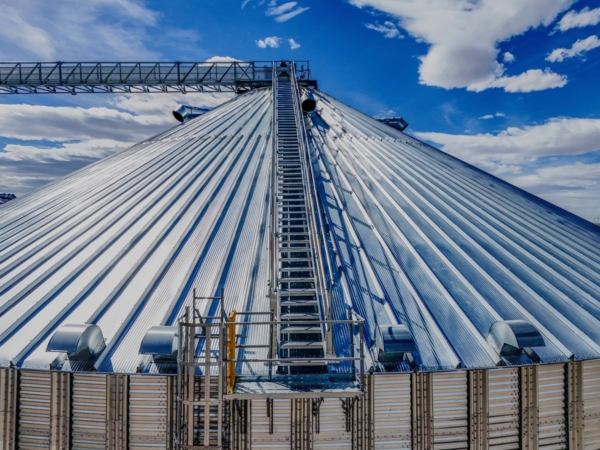
The expansion added a Chief Agri bin with more than 800,000 bushels of capacity at Peetz Farmers Co-op’s Peetz, Colo., location. Photo credit: Peetz Farmers Co-op.
Peetz Farmers Co-op adds more than 800,000 bushels of storage as increasing corn production drives the need for additional capacity.
For several years, Peetz Farmers Co-op faced the same problem each fall: more corn was arriving than the cooperative had room to hold. With corn production increasing across the area, the pressure was not going away. Peetz Farmers Co-op President and CEO Chris Roberts said improved corn genetics and the increasing popularity of dryland corn have contributed to better-than-average yields and increased volumes.
“We had several years where we were selling corn at harvest basis to make room for all the farmers wanting to bring corn,” Roberts said. “To accommodate the growing demand, we had to expand or turn away farmers, which we didn’t want to do.” The answer was a major expansion at the cooperative’s Peetz, Colorado, location.
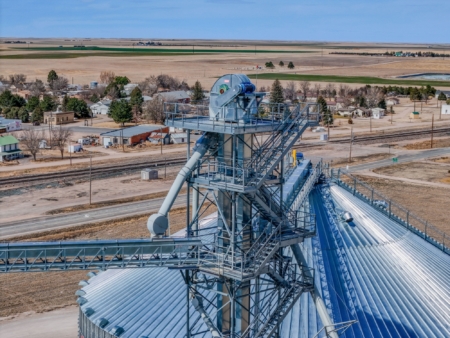
Completed in mid-2025, the project added a Chief Agri CB40-19 bin measuring 123’9” in diameter with more than 800,000 bushels of capacity. The project also included a 20,000-bushel-per-hour fill conveyor, 10,000-bph reclaim conveyor, catwalk system and additional material handling equipment. M & N Millwright served as general contractor and millwright for the project. The expansion increased storage while adding the handling equipment needed to integrate the new capacity into the existing operation.
More Grain, More Storage
Peetz Farmers Co-op handles red wheat, white wheat, proso millet and corn. Before the expansion, the Peetz location had approximately 1.6 million bushels of storage, and the new bin increased that to approximately 2.4 million bushels. Combined with the cooperative’s Iliff, Colorado, facility, Peetz Farmers Co-op now has approximately 4.2 million bushels of storage. The additional capacity addresses the immediate need for corn storage, but it also gives the cooperative more flexibility in managing its other commodities.
Roberts said expanding storage allows Peetz to hold corn or wheat longer and gives the cooperative greater ability to take advantage of carries in the wheat market. That flexibility was particularly important because Peetz had been moving large volumes of corn during harvest to maintain space for incoming grain. In the roughly three years leading up to the project, Roberts estimated the cooperative was shipping about 1 million bushels of corn during harvest. Additional storage reduces that pressure while giving the cooperative more control over when grain leaves the facility.
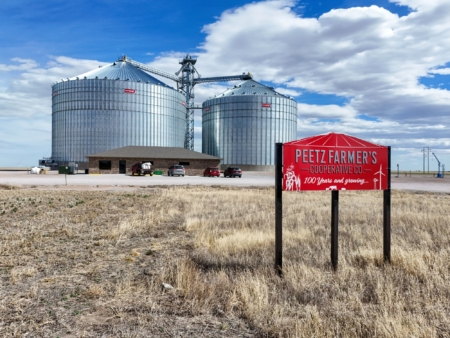
The expansion also gives Peetz more options for separating and moving commodities. Wheat can remain in existing storage while corn goes into the new bin, with both commodities moving through the facility’s handling system. An additional Chief loadout bin also was included in the expansion. “The new bin fits into our overall operation, giving us the ability to hold corn or wheat longer or, in a high-yield year, to be able to serve all of our customers,” Roberts said.
Putting the Capacity to Work
Peetz did not have to wait long to find out whether the additional storage was needed. During the first harvest with the new bin operational, the cooperative handled more grain than it ever had before, with nearly 6 million bushels moving through the Peetz and Iliff locations combined. Even with the additional capacity, the cooperative shipped approximately 1 million bushels during harvest. Without the new bin, Roberts said Peetz would have needed to move another 800,000 bushels during harvest or potentially turn customers away.
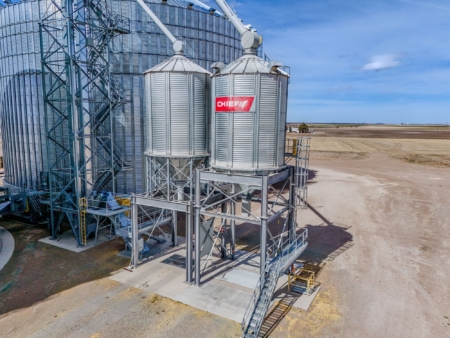
“The results have been great,” Roberts said. “The first year it was operational, we took in more total bushels than we had ever taken in before.” Storage is only one part of handling that kind of volume, and Peetz also places a premium on moving trucks through the facility quickly. Roberts said three to four legs can be operating at the Peetz location at any one time, with another leg available at Iliff. “Farmers tell us all the time how efficient and fast we are at unloading,” he said. “We have the strength of speed with three to four legs operating at any one time and another one in Iliff to be very efficient in getting farmers in and out quickly.”
Building Around an Operating Facility
M & N Millwright managed the project from site preparation through startup, while Peetz used its own electrical contractor. Neil Benson of M & N Millwright said the project team coordinated construction around the cooperative’s ongoing business. “We worked with them to not interrupt daily operation where it could be avoided, and all went smoothly,” Benson said. The entire project, including startup, was completed before harvest.
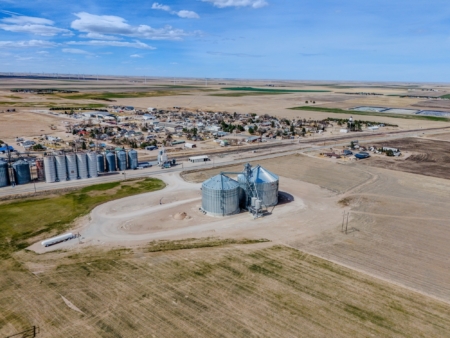
Timing the work during Peetz’s offseason helped minimize disruptions, and Roberts said the cooperative was able to continue much of its normal business through other parts of the facility while construction was underway. The work was not without complications, however, because existing underground electrical lines ran through the area where the new bin was planned. Peetz relocated the lines rather than construct the bin over them, and final inspection of the new electrical work took several weeks longer than anticipated. “There are always construction and scheduling challenges,” Roberts said. “Other than a few hiccups here and there, it all went smoothly.”
Building on Existing Relationships
The project was not Peetz Farmers Co-op’s first experience with either M & N Millwright or Chief Agri. The cooperative already had Chief equipment operating at another facility for approximately 10 years, and Roberts said that equipment had performed well mechanically. Reliability becomes especially important during harvest, when equipment needs to keep running as grain moves through the facility at a steady pace. Roberts said the Chief equipment Peetz has operated over the years has performed the way the cooperative needs it to during those demanding periods.
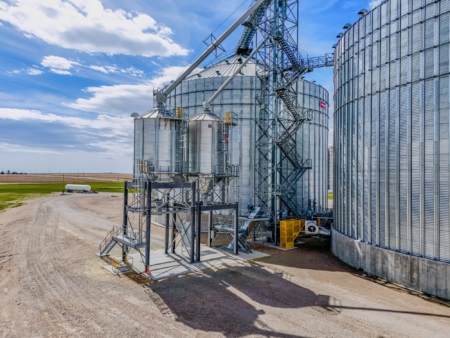
That previous experience, combined with Peetz’s long-standing relationship with M & N Millwright, played a role in choosing Chief again and working with M & N on the expansion. The completed system includes Chief aeration equipment, bucket elevators, conveyors, catwalks, steel storage, overhead loadout structures and tower support equipment. Other project suppliers provided components ranging from foundations and pile work to temperature monitoring, grain probing and bin sweeps. Together, the new storage and handling components expanded the cooperative’s ability to manage larger volumes while working within its existing Peetz operation.
While the new bin itself was built to address a current capacity need rather than serve as the first phase of another expansion, the Peetz site still has room for future growth. Roberts said additional investment will depend on customer demand and the cooperative’s financial position.
For now, the expansion has addressed the problem that drove the project in the first place, giving Peetz more room to handle a growing corn crop, more flexibility to manage wheat and enough additional storage to reduce the amount of grain that must leave the facility during the busiest weeks of the year. “When we are financially ready and if there’s demand from our customers,” Roberts said, “we are always willing to look at expansion to service our farmers.”