
Photo credit: FEFAC.
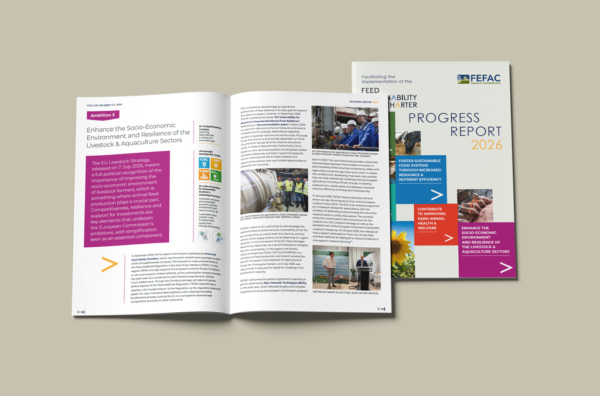
FEFAC has published the sixth edition of its Feed Sustainability Charter 2030 Progress Report, highlighting progress by the European feed industry toward five sustainability ambitions: climate neutrality, responsible sourcing, animal health and welfare, resource efficiency, and socioeconomic resilience.
The report comes as a new FEFAC presidency takes office and the European Commission adopts its EU Protein Plan and EU Livestock Strategy. FEFAC said the policy package addresses strategic vulnerabilities facing Europe's feed and food chains.
The EU Protein Plan includes a target of increasing the share of EU-grown oilseeds and protein crops used in domestic feed to 35% by 2035, up from about one-quarter today. FEFAC also identified strategic dependencies involving essential feed additives, including vitamins and amino acids, for which Europe remains heavily reliant on a limited number of non-EU suppliers.
The report highlights several achievements from the past year, including progress by the Global Feed LCA Institute Database, a symposium focused on circular feed and feed industry site visits involving European Commissioner for Agriculture and Food Christophe Hansen.
It also highlights the election of Anton van den Brink, FEFAC deputy secretary general, as chair of the European Livestock Voice.
FEFAC President Nicolas Coudry-Mesny said the report demonstrates the actions being taken by the European feed industry to strengthen the resilience, competitiveness and sustainability of the livestock and aquaculture sectors.
The sixth progress report details industry efforts in resource efficiency, circularity and access to essential feed ingredients while outlining progress toward the Feed Sustainability Charter 2030 ambitions.
Source: FEFAC, "FEFAC publishes 6th Feed Sustainability Charter 2030 Progress Report"