
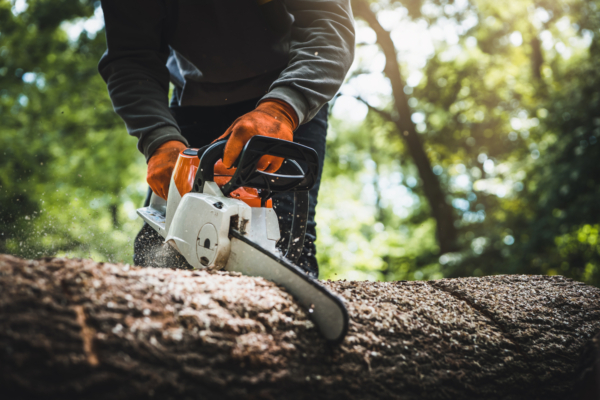
Fall brings increased chain saw use and a greater risk of accidents, making proper planning and protective equipment essential for anyone working in the woods.
University of Missouri Extension state forester Hank Stelzer says chain saw accidents are painful, expensive and preventable. Planning before entering the woods can help reduce the risk of injury.
The Occupational Safety and Health Administration reports that more than 250 people die annually from chain saw accidents in the United States. Legs, knees, wrists and hands face some of the greatest risks of injury.
Most chain saw accidents involve kickback, which occurs when the upper tip of the chain saw guide bar contacts an object. The contact can cause the guide bar to rapidly move back toward the operator.
Proper protective equipment can reduce the severity of injuries, particularly for casual operators who use chain saws infrequently.
Before purchasing a chain saw, operators should select equipment that meets their needs. Each chain saw has advantages and disadvantages, and Stelzer recommends consulting a trained dealer with knowledgeable staff. MU Extension also provides guidance on selecting and maintaining a chain saw.
Operators should avoid working alone in the woods. Someone should know the operator's location and estimated return time. A cellphone should be carried, and operators should check whether they have a signal in the area where they will be working.
Properly fitted chain saw leg chaps and headgear can provide important protection. Stelzer recommends wraparound chaps, which cost about $100. Chaps should be measured using the outseam, rather than the inseam, from the waist or belt to the top of the boot.
Operators should wear a full helmet with hearing protection and a guard or safety glasses, as well as flexible gloves. A first aid kit should include large trauma pads and bottles of water for eyewash.
Anyone who uses a chain saw should receive proper training before operating the equipment. Employees and young people should be taught how to operate chain saws and dress appropriately for the work. Operators should understand potential hazards and emergency procedures and should work within their skill level.
The work area should be checked before cutting begins. Operators should make sure they have secure footing, look for other people in the area and identify electrical lines in and near the work area. Branches that could become dislodged and fall should also be identified.
Before starting a chain saw, operators should read the manual and follow the manufacturer's instructions. The saw should be in good working condition, and damaged equipment or saws with disengaged safety devices should never be used.
Stelzer advises against drop-starting a chain saw, a practice in which the operator holds the saw in one hand while pulling the starter rope with the other. The operator has little control over the saw when it starts.
Instead, operators can place the saw on the ground, put one foot inside the rear handle, place one hand on the top handlebar and pull the starter rope with the other hand. Another method is to hold the saw in one hand, place it between the legs at the knee, firmly squeeze the saw and pull the starter rope with the free hand. The safety brake should be engaged when starting the saw using either method.
While operating a chain saw, workers should maintain secure footing and keep both hands on the handles. Operators should plan where objects may fall and avoid cutting directly overhead.
Source: University of Missouri, "Cut safety risks when using a chain saw"