
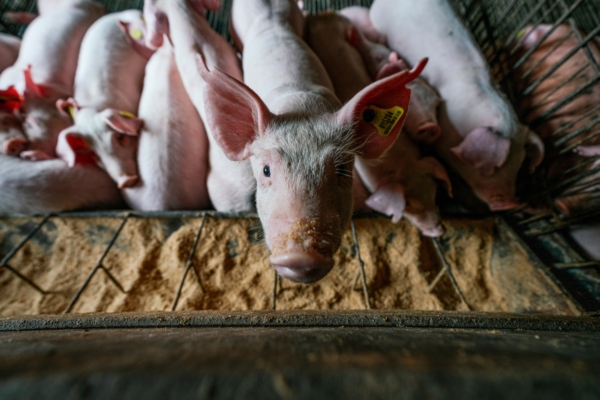
A University of Illinois study has quantified the effects of heat damage in soybean meal, demonstrating how processing quality can significantly influence pig growth performance even when diets appear nutritionally balanced on paper.
Soybean meal is a primary protein source in swine diets and must be heated during processing to eliminate antinutritional factors. However, excessive heat can trigger a Maillard reaction, a chemical process that binds lysine into a form that pigs cannot utilize. Lysine is the first-limiting amino acid in most swine diets and plays a critical role in muscle development and growth.
Researchers L. Torrez-Mendoza and H.H. Stein evaluated the impact of processing conditions by feeding 160 weanling pigs diets containing soybean meal processed at normal, moderately overheated and severely overheated levels.
The study found that severe overheating reduced reactive lysine, the bioavailable form of the amino acid, by 44%, falling from 2.84% to 1.59%. As a result, pigs consuming the severely heat-damaged soybean meal experienced significantly reduced growth performance.
By day 28, pigs fed the severely overheated soybean meal weighed nearly 3 kilograms less than pigs receiving the control diet. Researchers noted that the performance decline could affect feed conversion, days to market and overall profitability.
To determine whether nutritional adjustments could offset the effects of heat damage, the research team supplemented the heat-damaged diets with crystalline amino acids to restore lysine levels.
While the reformulated diets improved performance compared to untreated heat-damaged diets, pigs still failed to match the growth rates, feed intake and final body weights achieved by pigs fed properly processed soybean meal. Researchers suggested that heat damage may also reduce energy digestibility, limiting the effectiveness of amino acid supplementation alone.
The findings indicate that reformulation cannot fully compensate for processing-related quality losses.
The study also highlights differences in soybean meal quality among global origins. Research comparing soybean meal from the United States, Argentina, Brazil, China and India has found greater nutrient variability and higher indicators of heat damage in some South American sources.
According to the report, U.S. soybeans typically arrive at processing facilities with lower moisture levels because they naturally field-dry before harvest in the Midwest climate. Lower moisture content reduces the amount of heat required during processing, helping minimize the risk of heat damage.
Processing quality is commonly evaluated using two industry measurements: protein dispersibility index (PDI) and potassium hydroxide (KOH) protein solubility. Well-processed soybean meal generally targets a PDI range of 15% to 30%, while KOH protein solubility above 75% indicates the protein remains intact and available for animal use.
The research underscores the importance of processing consistency and amino acid availability in soybean meal, suggesting that ingredient sourcing can play a significant role in maintaining swine performance and reducing nutritional risk.
Source: U.S. Soybean Export Council, "The Hidden Cost of Heat Damage: Why Soybean Meal Origin Affects What Pigs Actually Absorb"