
Key topics include emission reduction, the use of alternative protein sources and effective forage production
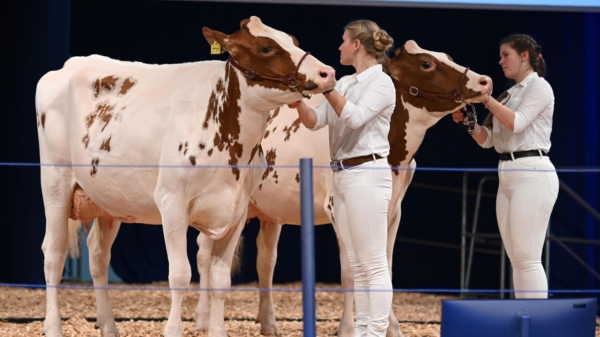
Photo credit: EuroTier.
Feeding strategies are central to livestock production, as they significantly influence animal performance, profitability and environmental and climate impacts. The goal is to supply animals with energy and nutrients as precisely, efficiently and needs‑based as possible, thereby improving overall feed efficiency.
EuroTier 2026 will once again provide important impulses for the development of feed and feeding strategies. In Hanover, Germany, key topics include emission reduction, the use of alternative protein sources in animal nutrition and effective forage production and preservation. For farmers, the exhibition offers an excellent platform to deepen specialist knowledge and engage with exhibitors, colleagues and experts.
Emissions: Opportunities in Feeding and Forage Production
Feeding practices largely determine how effectively animals are supplied with energy and nutrients. They also influence nitrogen and phosphorus excretion and the extent of ammonia, nitrous oxide and methane emissions. Key levers for reducing emissions include efficient forage production, minimizing losses along the entire feed chain and formulating rations precisely according to animal requirements. High‑quality forage, professional silage and storage management and regular feed analyses support resource‑efficient production, cost reduction and a lower overall emission intensity at farm level.
Environmental considerations also require attention to methane formation in the rumen. Methane output is influenced mainly by feed intake and by the fiber and fat concentration of the ration, while the physiological needs of ruminants must be respected. Research shows that high forage quality is crucial because it reduces reliance on concentrate feed and improves overall feed efficiency, contributing both to economic performance and environmental protection.
Because methane production is essential for numerous physiological and biochemical processes in the rumen, it cannot be completely avoided. The focus is therefore on maximizing efficiency. Stable animal health, high lifetime productivity and longer productive lifespans significantly improve feed efficiency, expressed as the feed‑conversion ratio (FCR), and reduce the emission intensity of milk and meat production. Additional contributions come from breeding progress, optimized herd and farm management, needs‑based fertilization and modern manure storage and application technologies.
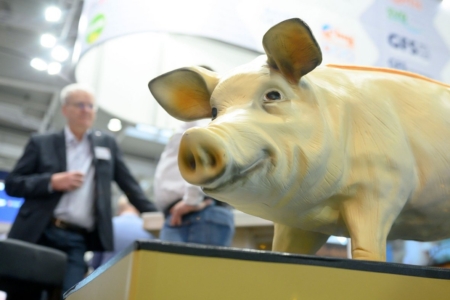
DLG Spotlight: Emission Reduction
In pig production, nitrogen‑ and phosphorus‑reduced feeding strategies are a central tool for lowering ammonia emissions. As a general rule, reducing crude protein concentration by one percentage point lowers ammonia emissions by around ten percent. The focus lies on precise amino acid supply and ration formulation based on digestible amino acids. When adapted to farm conditions, this feeding strategy supports performance while ensuring environmentally responsible nutrient use.
In poultry farming, nitrogen‑reduced and phosphorus‑reduced feeding is likewise an effective method. By precisely adjusting nutrient concentrations to animal needs, nutrient surpluses can be significantly reduced, lowering nitrogen and phosphorus inputs to soil, water and air.
The DLG Spotlight “Emission Reduction” at EuroTier 2026 will showcase the role feeding plays in reducing emissions and highlight technical solutions for pig and poultry systems. Visitors will have the opportunity to discuss practical approaches with experts and exhibitors, combining environmental and climate protection with animal welfare and economic viability.
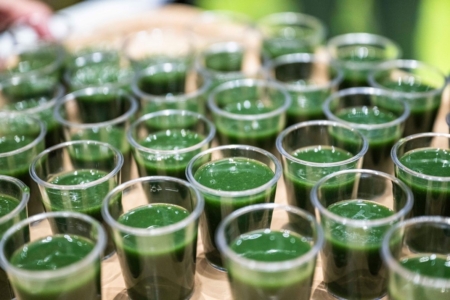
Alternative Protein Sources for Animal Nutrition
Parallel to EuroTier, the Inhouse‑Farming – Feed & Food Show will again take place, established as a central platform for future‑oriented agricultural and food systems. A key focus lies on the use of alternative protein sources for animal feeding. With global demand for animal products rising, the need for sustainable, regionally available and economically viable feedstuffs continues to grow.
In addition to domestic grain legumes such as peas, lupins and field beans, insects are increasingly coming into focus as a protein source. They offer considerable potential to reduce imports of soybean meal and fishmeal from overseas. Since EU‑wide approval in 2017, the insect sector has developed dynamically, especially through the use of black soldier fly larvae, whose protein content is comparable to soybean meal.
Automated rearing systems enable insect production directly on farms using regional by‑products, opening new value‑creation opportunities and potentially lowering feed costs. Despite their high sustainability potential, insect‑based systems remain demanding and, like all livestock‑related production, are subject to feed law regulations.
Algae also offer excellent potential for protein production in indoor systems. These processes are particularly attractive when combined with the use and upgrading of by‑products from food and bioenergy production, supporting upcycling concepts. Microalgae such as Spirulina and Chlorella allow the production of high‑quality proteins and oils for feed enrichment and are already included in the positive list of single feed materials. First modular and scalable photobioreactors are already in practical use, especially in aquaculture, where microalgae have long been used successfully for rearing fish and crustacean larvae.
Forage Quality as a Key Success Factor
Forage quality is a decisive factor for high‑performing ruminant herds and profitable milk production. Significant losses still occur along the forage chain, from field to feeding. Consistently applying best practices can significantly reduce these losses.
High and stable forage quality requires the targeted use of modern machinery at every stage, including harvesting, conservation, storage and feeding. Well‑coordinated equipment helps save labor, reduce weather‑related risks and minimize losses in quantity and quality. Fast, low‑loss processes such as completing ensiling within 24 hours or achieving rapid drying during haymaking are essential, along with correctly adjusted machinery to prevent contamination and resulting fermentation issues.
Modern technology supports forage hygiene, fermentation quality and storage stability, for example through low‑emission manure application, adapted chop lengths, approved silage additives, high compaction and airtight covering systems. Proper silage removal is also crucial: clean cuts, adequate advancement and daily fresh feeding prevent reheating and spoilage. Only hygienically sound, stable and well‑digestible forage ensures high intake and healthy, productive animals.
Accurate knowledge of silage quality is essential for precise ration formulation. In maize and grass silages, dry‑matter and nutrient contents can vary significantly within a single silo, directly affecting ration accuracy. Modern dry‑matter sensors used during feed‑out enable continuous real‑time measurement and automatic ration adjustment. While initial analyses provide a planning basis, regular follow‑up sampling is required to fine‑tune forage inventories and maintain optimal feed efficiency.
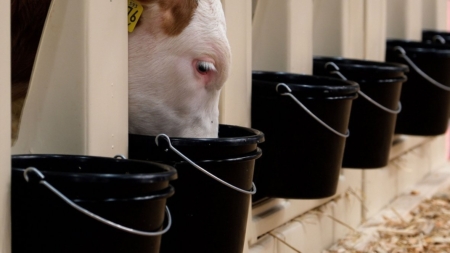
DLG Spotlight: Forage Production
Forage production plays a key role in needs based ruminant feeding, whether based on maize silage, grass silage, fresh grass or hay. Consistently high forage quality is crucial for animal health, performance and farm profitability. As part of a curated special showcase at EuroTier from November 10 to 13, 2026, exhibitors will demonstrate how digital and smart farming technologies in forage production can help optimize forage quality from cutting to ensiling.
Read more from EuroTier here.