

Cheryl Girling, senior director, Enterprise Solutions at Corpay Cross-Border Solutions
Canada’s agricultural sector stands at a pivotal moment. Since the new administration took office in early 2025, led by Prime Minister Mark Carney, global trade and tariff disputes have remained a recurring challenge, further intensifying the uncertainty for cross-border businesses. Coupled with inflation, shifting global demand and climate-related disruptions, the agriculture sector – one of Canada’s most trade-reliant industries – continues to feel the strain. From grain exporters to agri-tech innovators, the industry has historically relied on stable market access and predictable pricing.
Today, however, that stability is harder to come by. Climate change is reshaping growing seasons and yields, regulatory environments are shifting and digitization is exposing farms and food businesses to new forms of cyber risk. Meanwhile, global buyers are increasingly demanding local-currency settlement options, supply chains stretch across more markets than ever before and even everyday payment flows are taking on new layers of complexity. Against this backdrop, efficiency in operations and cross-border transactions is more critical than ever.
As markets evolve and new tariffs or policy shifts emerge, businesses in the agricultural space must look beyond production and exports. Success now often hinges on the ability to operate seamlessly across borders, which requires a sharper focus on international payments. Having the right systems in place to manage multiple currencies, minimize risk and capture new growth opportunities is no longer optional.
Market Diversification in Canada
According to the Royal Bank of Canada, Canada has become heavily reliant on the United States for its agri-food exports over the years, which have now quadrupled in value to more than $100 billion. Recognizing the risks of overdependence, the government has been diversifying its agricultural export markets and strengthening ties with destinations beyond the traditional U.S. market.
However, diversification is not just about marketing and selling into new regions. Entering international markets comes with significant financial and operational barriers. Among the most pressing are challenges related to cross-border transactions and currency management, with foreign exchange rates fluctuating by the second during active trading hours.
For businesses, critical questions quickly arise: How can they stay competitive in international markets? How do they protect their profit margins? How can they manage foreign exchange holdings effectively? What risks come with making payments abroad?
To safeguard profitability, many businesses turn to currency risk management strategies, such as forward contracts and hedging, to help mitigate exposure to sudden exchange rate movements. While these tools can be effective in specific situations, they often require financial expertise, active monitoring and dedicated resources to execute efficiently.
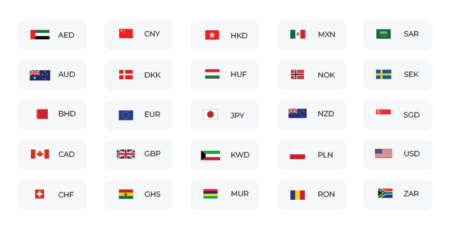
This is where Multi-Currency Accounts (MCAs) provide an alternate solution worth considering. By allowing agricultural businesses to hold, receive and send funds in multiple currencies from a single platform – across Asia, Europe and the Middle East – MCAs offer added flexibility and control in managing international payments and can work hand-in-hand with currency risk management strategies to support long-term growth.
MCAs as a Solution in Times of Uncertainty
Instead of navigating the costly and complex process of opening local bank accounts in each new country, MCAs give agricultural businesses the ability to hold, receive and send funds in multiple currencies, directly from a single and secure platform. This means exporters can receive payments from overseas buyers in their local currency, hold balances as needed and choose when to convert based on favorable exchange rates. By removing forced conversions and unnecessary intermediaries, businesses gain both flexibility and cost savings.
These capabilities have become particularly meaningful for exporters selling into USD-denominated commodity markets or expanding into Europe, Asia, or the Gulf States. For example, many grain and oilseed exporters prefer to receive USD or EUR directly and convert only when market conditions support stronger margins. Others choose to hold foreign currency to pay international suppliers, such as logistics providers and machinery vendors, without absorbing unnecessary FX costs.
The benefits extend well beyond foreign exchange savings. With MCAs, exporters can diversify their supply chains more easily by paying international suppliers in local currencies, strengthening relationships and building trust. They also simplify operations by consolidating payments and account management into one online platform, reducing administrative burdens and freeing up resources to focus on growth. At the same time, payments are processed securely and delivered at full value, giving both payors and recipients greater transparency and confidence in the transaction.

The Real-World impact
Consider a mid-sized grain exporter shipping wheat and canola to buyers in Germany, South Korea and the United Arab Emirates. Previously, payments arriving in EUR were immediately converted to CAD, regardless of whether the rate was attractive and USD freight payments resulted in multiple layers of conversion costs. Maintaining several foreign bank accounts also required significant administrative effort. By switching to an MCA, the exporter could receive EUR, GBP, USD and AED directly, hold balances for future payments, convert only when rates were favorable and give buyers the option to settle in their preferred currency. The outcomes are more predictable margins, stronger buyer relationships and better cash-flow planning.
MCAs are also enabling transformation across the growing landscape of digital agricultural ecosystems. Many aggregator platforms now connect farmers, processors, exporters and buyers through integrated workflows for contracts, settlements, logistics and payments. By embedding MCAs into these payment process, such platforms allow users, such as grain exporters selling to European or Asian buyers, to receive foreign payments as though they held local bank accounts. A Canadian exporter selling through the platform can receive EUR directly, hold it for future EUR-denominated expenses, or convert it when the market is favorable. Neither party is forced into immediate FX risk or unfavorable conversion timing. This reduces friction across the entire value chain and strengthens the user experience for everyone on the platform.
In a trade environment marked by tariffs, fluctuating exchange rates, geopolitical uncertainty and increasingly globalized supply chains, MCAs provide Canadian agricultural businesses with the efficiency and flexibility needed to expand into new markets and seize global opportunities.
Looking Ahead
The global agricultural trade environment shows no signs of becoming less complex. Climate volatility, tariff disputes and technological disruption will continue to challenge Canadian businesses. But within that complexity lies opportunity. As new markets emerge across the globe, the ability to trade efficiently and securely will be a defining factor for success.
MCAs empower Canadian agricultural businesses to rise to this challenge. By providing autonomy, efficiency and transparency in international payments, they transform cross-border transactions from a barrier into a strategic advantage. While MCAs cannot solve every issue, from weather extremes to shifting trade regulations, they help mitigate risk, lower costs and position businesses to seize growth opportunities around the world.
For Canada’s agricultural sector, resilience will not be built on production alone. It will depend on the ability to navigate global markets with agility, security and confidence. MCAs deliver exactly that, enabling Canadian exporters not just to weather disruption, but to thrive in it.
About the author
Cheryl Girling is senior director, Enterprise Solutions at Corpay Cross-Border Solutions. She started her career in FX and helping clients protect their bottom line through currency risk management strategies and has since become a payment nerd, too.