
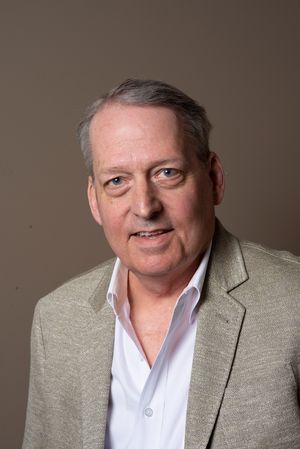
For more than 40 years, Dr. Charles R. “Charlie” Hurburgh has been one of the most influential voices in grain quality, measurement science, and education.
A native of Rockwell City, IA, he built his career on a belief that guided everything he taught and researched: Grain systems work best when information is clear, consistent, and grounded in science. That philosophy shaped his service to farmers, elevators, processors and regulators throughout a tenure at Iowa State University (ISU), Ames, that began in 1976 and continued through his retirement in July 2025.
Hurburgh earned a bachelor’s degree in agricultural engineering from ISU in 1973, then returned for graduate study that blended engineering precision with the real-world challenges of grain handling.
He joined the university as a graduate research assistant in 1976, moved quickly into instructional roles and, by 1982, became an assistant professor with responsibilities that combined teaching, research, and industry outreach. He completed a master’s degree in 1980 and a doctorate in 1981, formalizing the academic foundation that supported his lifelong work in grain quality.
As professor in charge of the ISU Grain Quality Research Laboratory and a leader within the Iowa Grain Quality Initiative, Hurburgh helped connect university research to day-to-day grain operations. His guidance was defined by pragmatism. A system is only as good as the clarity of its measurements. A standard is only as strong as the people who apply it. And research only matters when it can be used by the people who need it.
Research That Served the Industry
At ISU’s Grain Quality Laboratory, he led analyses of the chemical and physical properties of grain, covered instrumentation, near-infrared spectroscopy, sensors, chemometrics, metrology, and the interpretation of large datasets. These focuses were not academic abstractions. They became the tools he used to help the grain industry reduce variability, strengthen sampling procedures, and implement more consistent grading practices.
Hurburgh’s leadership later extended to the Iowa Grain Quality Initiative, where he helped translate scientific findings into practical guidance. Operators used his materials to troubleshoot moisture systems, manage storage risk, understand grain composition, and anticipate quality issues during harvest.
Merchandisers relied on his clarity when evaluating grain condition and potential loss. Producers trusted his seasonal outlooks and safety guidance. His work touched every part of the supply chain.
Early Public Impact
By the late 1970s, grain settlement practices were under scrutiny across Iowa. Farmers were raising questions about fairness and consistency in shrink factors and sampling techniques. State leaders turned to ISU for objective analysis, and Hurburgh was among the engineers called upon to provide technical insight.
In 1978, the Des Moines Register reported on the Legislature’s study of shrink factors, noting the university’s role in examining how moisture loss and handling loss were calculated. Hurburgh contributed to those evaluations, helping separate myth from measurable science and giving lawmakers a clearer understanding of how shrink decisions impacted producers.
His ability to explain technical issues in practical terms quickly made him a reliable voice. In an April 15, 1979 article on grain probes and sampling, the Register quoted his explanation of how some devices gathered unrepresentative samples. It was one of the first moments when the broader public heard directly from a young engineer who would soon become one of the industry’s trusted authorities.
The Moisture Meter Episode
Between 1978 and 1980, moisture measurement became a statewide controversy. Grain prices were tied directly to moisture content, and discrepancies among different meters meant real financial consequences. The Register reported on April 13, 1980 that farmers were losing significant income due to variations between meter models, factory settings, and levels of calibration drift.
Hurburgh’s work in this period helped regulators and operators understand why machines performed differently and how consistent calibration could be implemented. The follow-up coverage on April 20, 1980 documented broader testing and the need for uniform meter standards. While this episode represented only one chapter in his early career, it deepened his focus on measurement accuracy and influenced the direction of his future research.
National Recognition and Program Growth
The U.S. Department of Agriculture recognized Hurburgh’s contribution to grain measurement science in 1981 with an individual research grant of $80,000 – one of the most substantial awards of its kind at the time. Adjusted for inflation, that would equal nearly $300,000 today.
The project, “Measurement of Grain Quality at Country Elevators,” advanced calibration models, improved grading consistency, and strengthened the scientific foundations behind quality evaluation.
Over the next several decades, Hurburgh expanded these efforts through the Iowa Grain Quality Initiative, which became known for combining engineering, chemistry, and real-world grain management into clear, accessible information. His work helped facilities reduce quality losses, navigate food safety risks, and adopt new testing technologies with confidence.
Educator, Mentor, and Industry Advocate
Teaching was central to Hurburgh’s career. He taught agricultural engineering courses for decades and mentored students who now serve across the grain handling and processing industries. His instruction combined scientific rigor with the operational realities of grain handling. Students learned not only how measurement systems worked but how to apply them on the job.
Beyond the university, he delivered workshops, extension programs and industry trainings that reached thousands of grain professionals. His ability to translate complex measurement principles into straightforward, actionable steps made him one of the most relied on technical educators in the grain industry.
Strengthening GEAPS
Hurburgh joined the Grain Elevator and Processing Society (GEAPS) in 1983, finding in the organization a natural place to support workforce development and technical advancement.
He contributed to GEAPS courses, served as a speaker and advisor and helped shape educational offerings that remain central to the organization’s mission. Today, he continues to serve on the GEAPS board of directors, supporting the next generation of grain professionals and contributing regularly to Grain Journal.
A Career built on collaboration
Hurburgh joined GEAPS in 1983, finding in the organization a natural place to support workforce development and technical advancement. He contributed to GEAPS courses, served as a speaker and advisor and helped shape educational offerings that remain central to the organization’s mission. Over the years he became a consistent voice in GEAPS programming, connecting academic research with the practical needs of grain handlers and bringing clarity to topics that often lacked accessible guidance. Today he continues to serve on the GEAPS board of directors, supporting the next generation of grain professionals and contributing regularly to Grain Journal.
Hurburgh often notes that any meaningful success in his career came from the people who worked alongside him. More than 60 graduate students and staff passed through his program over the years, and he credits their dedication with shaping both the work and the impact of the laboratory. Those students have gone on to roles across the world, including positions in pharmaceuticals, information security, GEAPS associate companies, laboratory science and biofuels. Their achievements, he says, stand as his most important contribution because each one carried forward the knowledge, curiosity and momentum that began in his program. His own entry into the broader grain industry grew from similar mentorship and chance connection. In 1982 Arvid Hawk introduced him to David Krecji during a visit to the Cargill Grain Lab in the Twin Cities, where he was discussing shrink research that later contributed to his doctoral work. That introduction led to an invitation to speak at the 1983 GEAPS Exchange in Dallas and marked the beginning of a relationship with GEAPS that broadened his professional reach and connected him with many of the people who shaped the industry in the decades that followed.
A Lasting Legacy
Hurburgh’s career is defined by persistent service to the industry. He brought clarity to complex issues, strengthened measurement systems and elevated the standards by which grain is evaluated. His work supported farmers, improved confidence in grain markets and shaped the technical practices used in facilities across the country.
As he looks ahead, his long-standing commitment to fairness, accuracy and clear communication remains unchanged. His influence continues through the systems he helped develop, the professionals he trained and the grain handlers who rely on his work each day.
Retirement may change Hurburgh’s role, but not his influence. His work will continue to support the grain industry for years to come.