
The grain and feed industry has always been the quiet engine driving the U.S. agricultural economy.
NGFA members connect farmers to markets, transform grain into essential feed and food ingredients and biofuels, and sustain the infrastructure that allows U.S. agriculture to compete globally. Now, new data puts numbers behind what those of us in the industry have long understood: Our collective work fuels far more than the rural economy – it strengthens the entire nation.
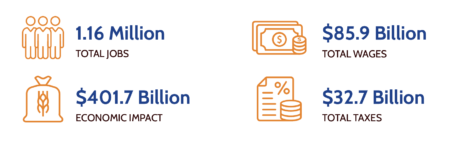
In September, NGFA sponsored and released “The Harvest Economy: 2025 Economic Impact of the U.S. Grain and Feed Industry,” a comprehensive study prepared by John Dunham & Associates. The results are striking. Taken together, U.S. grain, feed, and processing companies generate $401.7 billion in total economic output, about 1.3% of U.S. gross domestic product. Our industry supports more than 1.16 million jobs, pays $85.9 billion in wages and benefits, and contributes $32.7 billion in taxes to federal, state, and local governments.
Impact Beyond the Numbers
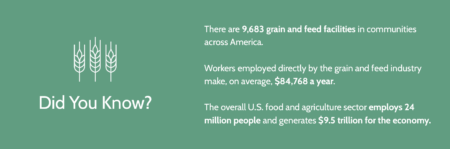
Behind those numbers are 9,683 grain and feed facilities operating across every state and congressional district. These businesses directly employ nearly 176,000 people, each earning an average of roughly $85,000 per year. The impact doesn’t stop there. When we purchase equipment, contract for transportation, or work with local service providers, we create hundreds of thousands of additional supplier and community jobs. The result is an industry that touches virtually every sector of the economy – from rail and barge operators to financial services, logistics, and technology.
The state-level data tells a powerful story of regional strength. Iowa leads with more than $43 billion in output and over 107,000 jobs, followed closely by Minnesota, Missouri, and Illinois, each exceeding $30 billion in impact. Nebraska, Texas, Indiana, Ohio, California, and Kansas round out the top 10, each generating between $14 billion and $22 billion. The economic footprint of grain and feed is truly nationwide.
NGFA took a rigorous approach to ensure credibility. The study used IMPLAN, a well-established economic modeling system, to calculate direct, supplier, and induced impacts. We aimed to present an accurate picture of how the grain and feed value chain supports communities across the nation.
To make this information accessible, NGFA launched an interactive online platform where policymakers, reporters, and members can explore state and district data, download fact sheets, and see how the industry drives local economies. Whether you are an elevator manager in Kansas, a feed mill operator in Ohio, or a barge terminal worker in Louisiana, your contribution forms part of this national story.
These findings confirm what we see every day: The grain and feed sector is essential not just for farmers and livestock producers but for U.S. economic stability and global competitiveness. Our members create opportunities in hometowns, on main streets, and across the rural United States.
As we look ahead, NGFA will continue to advocate for policies that strengthen supply chains, improve infrastructure, and support the people and companies that make this industry thrive. “The Harvest Economy” gives us the data to match our conviction: When the grain and feed industry grows, the United States prospers.
To explore the full study and interactive data, visit ngfa.org/industry-impact.